





Your business runs on technology. But what happens when the technology your entire workforce depends on suddenly stops working?
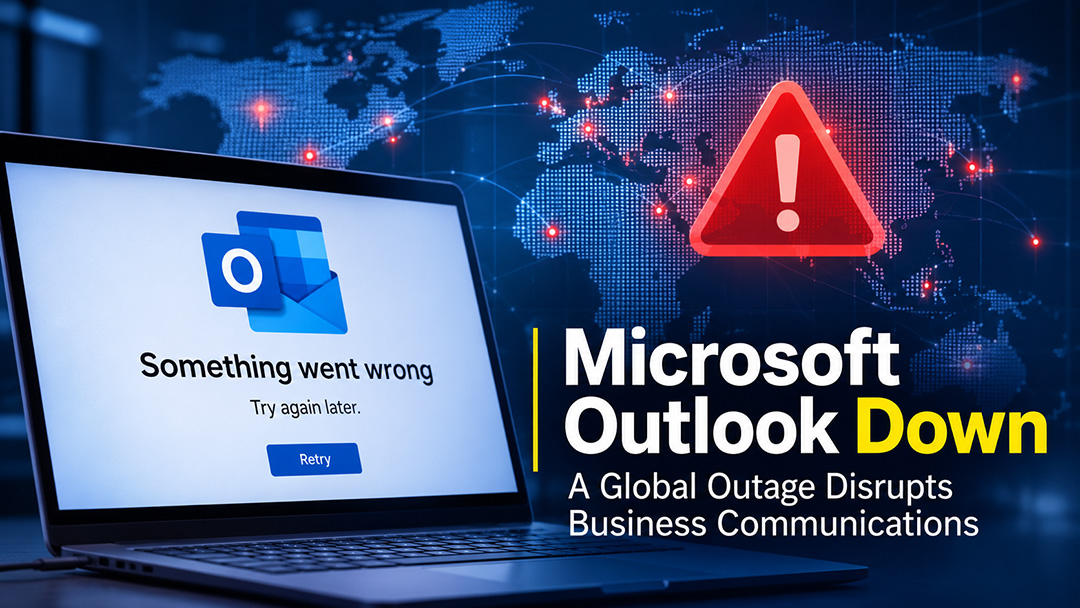
On November 12, 2026, Microsoft experienced a major global service disruption affecting Outlook and several Microsoft 365 services. The disruption continued into November 13, raising concerns among businesses that rely on Microsoft’s ecosystem for everyday operations.
Outlook, Microsoft Teams, Copilot and other connected services experienced widespread issues, affecting workplace communication, productivity and business operations.
According to reports from Al Jazeera, the disruption affected users across 74 countries. Microsoft continued working on recovery measures, with improvements being reported but services still experiencing disruption.
This incident raises a bigger question for business leaders:
Is your business prepared to operate when a critical technology platform suddenly becomes unavailable?
What Happened During the Microsoft Outlook Outage?
The Microsoft outage was not simply an email problem.
It highlighted how interconnected modern business technology has become.
Organisations depend on Microsoft 365 for:
- Business emails and internal communication.
- Microsoft Teams meetings and collaboration.
- Document sharing and workplace productivity.
- Cloud-based business operations.
- AI-powered workplace tools.
When these services experience disruption, the impact can extend far beyond an employee being unable to access their inbox.
Microsoft indicated that affected servers were failing automated health checks and becoming unavailable. The company investigated the issue and worked on configuration changes and server recovery.
Importantly, there was no indication that the incident was caused by a cyberattack, according to Microsoft’s public statements reported by The Guardian.
Sources:
- Al Jazeera: https://www.aljazeera.com/news/2026/11/13/microsoft-hit-by-global-outages-what-happened-and-why
- The Guardian: https://www.theguardian.com/technology/2026/nov/13/microsoft-outage-outlook-teams-word-excel-reports
- Reuters: https://www.reuters.com/technology/microsoft-365-outlook-down-thousands-us-users-downdetector-shows-2026-11-12/
Why Does an Outlook Outage Matter to Businesses?
For individual users, an email outage might be an inconvenience.
For businesses, it can become an operational challenge.
Imagine a sales team unable to respond to customer enquiries, an HR department unable to coordinate interviews, or an operations team unable to access important communications.
The consequences can include:
1. Lost Business Opportunities
When customers cannot receive timely responses, potential deals can be delayed or lost. Sales teams may struggle to communicate with prospects and clients.
2. Productivity Disruptions
Employees who depend on Outlook and Teams may be unable to complete everyday tasks, attend meetings or coordinate with colleagues.
3. Delayed Business Decisions
Leadership teams often depend on real-time information and communication. Technology disruptions can slow approvals, reporting and critical decisions.
4. Customer Experience Problems
Delayed responses, missed updates and interrupted support services can damage customer confidence.
5. Operational and Financial Risks
Even a temporary disruption can create unexpected costs through lost productivity, delayed projects and business recovery efforts.
The Bigger Problem: Businesses Depend Too Much on a Single Technology Ecosystem
The Microsoft outage highlights an important weakness in modern digital operations.
Many organisations have adopted cloud platforms, SaaS applications, AI tools and connected business systems without developing adequate contingency plans.
Technology integration creates efficiency, but it also introduces dependencies.
If a critical service becomes unavailable, connected workflows may be affected.
This is why businesses need to think beyond technology adoption.
They need technology resilience.
That means designing systems that can continue supporting essential business operations even when individual platforms experience downtime.
5 Ways Businesses Can Prepare for the Next Technology Outage
Businesses cannot prevent every cloud service disruption. However, they can reduce the impact.
Here are five practical steps organisations should consider.
1. Develop a Business Continuity Strategy
Identify the applications and systems your business cannot operate without.
Create alternative communication procedures, emergency contacts and recovery processes for critical operations.
2. Build Redundant Technology Infrastructure
Avoid depending entirely on a single service for every critical business function.
Evaluate suitable backup infrastructure, alternative communication channels and recovery environments based on business requirements.
3. Strengthen Cybersecurity and IT Monitoring
Continuous infrastructure monitoring helps organisations identify technical issues, suspicious activity and potential service failures.
Regular security assessments and incident response planning are equally important.
4. Automate Critical Business Workflows
Manual processes can create additional operational pressure during technology disruptions.
Automation, properly designed workflows and resilient system integrations can help businesses maintain essential processes.
5. Invest in Scalable Cloud and Software Architecture
Businesses should regularly evaluate their technology architecture to ensure it supports availability, scalability, disaster recovery and changing operational requirements.
A resilient infrastructure is not just about preventing downtime. It is about recovering quickly when downtime happens.
How Sphinx Worldbiz Helps Businesses Build Technology Resilience
The Microsoft outage is a reminder that digital transformation should not stop at adopting new technology.
Businesses also need reliable infrastructure, secure systems, intelligent automation and technology partners who understand complex business operations.
Sphinx Worldbiz helps organisations strengthen their digital capabilities through technology engineering, software development and IT solutions.
Our capabilities include:
Cloud Services and Infrastructure
Build and modernise cloud environments with a focus on scalability, infrastructure management and operational reliability.
Cybersecurity Solutions
Strengthen your digital security posture through security-focused technology solutions, risk assessment and infrastructure protection.
AI Agents and Intelligent Automation
Reduce repetitive manual work and improve operational efficiency with AI-powered agents and intelligent business automation.
Custom Software Development
Develop business applications and integrated software solutions designed around your operational requirements.
Resource Augmentation and Managed Services
Extend your technology capabilities with skilled engineering and IT professionals to support business-critical projects and ongoing operations.
Explore our technology capabilities at https://www.sphinxworldbiz.net/.
The Real Lesson: Technology Resilience Is a Business Priority
The Microsoft Outlook outage is more than a temporary technology disruption.
It is a wake-up call for organisations that depend heavily on cloud-based platforms and interconnected digital systems.
Businesses should not wait for the next major outage to evaluate their technology infrastructure.
The right time to prepare is before disruption happens.
Because in today’s connected business environment, the organisations that recover faster are often better positioned to protect customer relationships, maintain productivity and stay competitive.
Don’t let your business operations depend on a single point of failure. Build technology that keeps your business moving.
Is Your Business Technology Ready for the Unexpected?
Partner with Sphinx Worldbiz to explore cloud services, cybersecurity, AI automation, custom software development and technology engineering solutions.
Visit: https://www.sphinxworldbiz.net/
Let’s build a more resilient digital future for your business.