







AI is now a key business strategic priority and not a trial. Organizations are spending a lot on generative AI, intelligent automation, AI agents and domain-specific machine learning applications in 2026. Many enterprises are also leveraging managed IT services initiatives to accelerate digital transformation and prepare existing systems for AI adoption.
With the modernization of technology stacks, multiple organizations are now considering the cloud AI platform to influence:
- Time-to-market
- Governance and compliance
- AI development costs
- Model flexibility
- Long-term innovation capabilities
The landscape is dominated by two ecosystems—Microsoft Azure AI and Amazon Web Services AI.
This blog post offers an in-depth comparison of Azure AI and AWS AI, assisting the technology leader in making the right choice for their business goals.
Overview of Azure AI and AWS AI
Microsoft Azure and Amazon Web Services have developed comprehensive AI ecosystems that help enterprises build, deploy, and manage machine learning and generative AI solutions.
Azure AI Overview
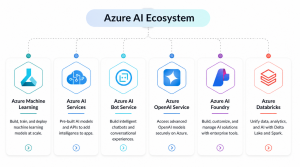
Microsoft has created an AI environment that is centered around enterprise productivity, governance, and generative AI adoption.
Azure Machine Learning
Azure Machine Learning (Azure ML) is Microsoft’s platform for:
- Model development
- Experiment tracking
- MLOps
- AutoML
- Responsible AI
It allows teams to go from experimentation to production while having integrated governance.
Ideal for
- Enterprise ML operations
- Regulated industries
- Teams already use Microsoft services.
Azure AI Services
Azure AI Services provide prebuilt APIs for:
| Capability | Service Example |
| Vision AI | Computer Vision, Face API |
| NLP | Language Service |
| Speech AI | Speech-to-Text, Translation |
| Search | Azure AI Search |
| Document Processing | Document Intelligence |
These services reduce development complexity and accelerate deployment.
Azure OpenAI Service
Azure OpenAI is a collection of Azure models joined by the Microsoft enterprise infrastructure.
Supported models include:
- GPT-4o
- GPT-4.1
- o-series reasoning models
- Embedding models
Organizations gain:
- Private networking
- RBAC controls
- Compliance certifications
- Enterprise-grade governance
Ideal Use Cases
- AI assistants
- Enterprise chatbots
- Knowledge retrieval systems
- Copilots
Azure AI Foundry
Azure AI Foundry offers:
- Agent development
- Model catalog management
- Evaluation pipelines
- Fine-tuning workflows
- Prompt engineering tools
It is Microsoft’s new, unified platform for developing enterprise AI applications.
Copilot Ecosystem
Microsoft has integrated AI into:
- Microsoft 365
- Dynamics 365
- GitHub Copilot
- Power Platform
This establishes an integrated productivity environment for enterprise users.
Key Strengths of Azure AI
- Strong enterprise governance
- Seamless Microsoft integration
- Azure OpenAI advantages
- Mature compliance framework
- Low-code AI capabilities
AWS AI Overview
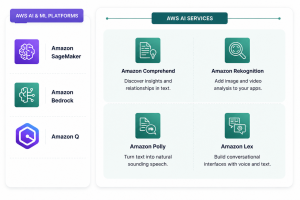
AWS has a flexible, deep infrastructure, and a wide range of access to AI models.
Amazon SageMaker
Amazon SageMaker supports:
- Model training
- Feature stores
- MLOps
- AutoML
- Deployment pipelines
It provides a rich set of options to support high-end ML applications.
Best for
- Data science teams
- Large-scale ML environments
- Complex production pipelines
Amazon Bedrock
Multiple foundation models are available through Amazon Bedrock.
Available providers include:
- Anthropic Claude
- Amazon Nova
- Meta Llama
- Mistral
- Cohere
In this multi-model approach organizations can stay free from vendors lock-in.
AWS AI Services
AWS offers AI APIs across:
| Capability | Services |
| Vision AI | Rekognition |
| NLP | Comprehend |
| Speech | Polly, Transcribe |
| Translation | Translate |
| Document AI | Textract |
Amazon Q
Amazon Q is an AI assistant for:
- Software development
- Operations
- Business productivity
- AWS management
Trainium and Inferentia
AWS’s standout features are not only the containers but also its custom AI chips.
Trainium
Designed specifically for model training.
Inferentia
Optimized for inferences workload.
Benefits include:
- Lower costs
- Better performance
- Greater scalability
What are the strengths of AWS AI?
- Broad model ecosystem
- Infrastructure flexibility
- Custom silicon innovation
- Advanced ML tooling
- Strong cloud-native capabilities
Azure ML vs SageMaker
| Feature | Azure Machine Learning | Amazon SageMaker |
| Ease of use | High | Moderate |
| Learning curve | Lower | Higher |
| AutoML | Strong | Strong |
| MLOps | Integrated | Highly customizable |
| Deployment | Simplified | Flexible |
| Enterprise governance | Excellent | Strong |
| Advanced customization | Moderate | Excellent |
| Scalability | High | Very high |
Verdict
- Azure ML emphasizes simplicity and governance.
- SageMaker prioritizes flexibility and engineering control.
Azure OpenAI vs Amazon Bedrock
| Criteria | Azure OpenAI | Amazon Bedrock |
| Model providers | Primarily OpenAI | Multiple vendors |
| GPT access | Native | Indirect |
| Fine-tuning | Supported | Supported |
| RAG capabilities | Excellent | Excellent |
| Security | Enterprise-grade | Enterprise-grade |
| Vendor flexibility | Moderate | High |
| Governance | Strong | Strong |
Use Azure OpenAI when:
- Your strategy centers around the GPT models.
- You use Microsoft tools for your environment.
Choose Bedrock if:
- It’s crucial that you experiment with several models.
- Preventing lock-in is a key priority.
Azure AI Services vs AWS AI Services
So now, let’s see how these two cloud service giants compare. Adoption is AWS’ strong suit, as it holds a 30% market share, while Azure holds a 21% share. However, is it the right option for your business? In this section, we are going to make a comparison between AI/ML services offered by AWS and Azure in various aspects.
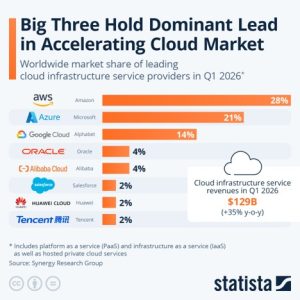
Source: statista
Overall Assessment
Both ecosystems offer mature AI APIs, although Microsoft tends to provide more tightly integrated experiences.
| Capability | Azure AI Services | AWS AI Services |
| NLP | Excellent | Excellent |
| Vision AI | Strong | Strong |
| Speech AI | Industry-leading | Strong |
| Document AI | Excellent | Excellent |
| Conversational AI | Strong | Strong |
| Ease of integration | Very high | High |
Developer Experience Comparison
| Area | Azure | AWS |
| SDKs | Mature | Mature |
| Documentation | Excellent | Extensive |
| Low-code tools | Strong | Moderate |
| User interface | Beginner-friendly | Engineering-focused |
| GitHub integration | Native | External |
Developer Preference
- Azure appeals to mixed teams and citizen developers.
- AWS attracts experienced engineers seeking greater control.
Security and Compliance
Both platforms support:
- GDPR
- HIPAA
- SOC 1
- SOC 2
- ISO 27001
Governance
Azure has an advantage for enterprises already invested in Microsoft security solutions.
Integration Ecosystem
Azure Ecosystem
- Microsoft 365
- Teams
- Power Platform
- Dynamics 365
- GitHub
AWS Ecosystem
- S3
- Lambda
- EC2
- DynamoDB
- Redshift
Comparison Table
| Ecosystem Area | Leader |
| Productivity tools | Azure |
| Serverless computing | AWS |
| Developer tooling | Tie |
| Data infrastructure | AWS |
| Low-code automation | Azure |
Pricing and Cost Efficiency
The price of products and services, and the efficiency of using resources.
Both providers support:
- Pay-as-you-go – Ideal for experimentation.
- Reserved Capacity – Reduces long-term costs.
- Training Costs – By leveraging AWS Trainium, organizations can benefit from extensive model training.
- Inference Costs – Inferentia optimizes economics of inference for production AI applications.
Cost Optimization
Azure offers:
- Reserved instances
- Spot VMs
- Hybrid benefits
AWS provides:
- Savings Plans
- Spot Instances
- Compute optimization
Side-by-Side Comparison
| Category | Azure AI | AWS AI |
| Machine learning | Excellent | Excellent |
| Generative AI | Excellent | Excellent |
| Ecosystem integration | Outstanding | Strong |
| Developer experience | Easier | More flexible |
| Security | Outstanding | Excellent |
| Scalability | High | Very high |
| Pricing efficiency | Strong | Strong |
| Best for | Enterprise environments | Cloud-native architectures |
The final decision: choose one?
Unfortunately, there is no “best of all worlds” for the “Azure AI vs AWS AI” debate. The ideal answer depends largely on factors related to your organization’s existing cloud footprint, the organization’s maturity when it comes to ai capabilities, its industry’s compliance and regulatory burdens, and its long-term innovation agenda.
Prior to making this decision, enterprises in Europe should consider the following issues when evaluating platforms for their business:
- Your current cloud architecture and ecosystem
- The balances between user-friendliness and deep customization of capabilities
- Industry regulations, GDPR, and European compliance guidelines
- Budget and the drive to optimize costs and the value of ai spend
- Your desired generative ai and machine learning workloads
- The size of your engineering teams and the overall maturity level of your AI adoption
- Existing legacy application modernization requirements and the ability to integrate AI capabilities into older systems.
When deciding to use the Azure AI ecosystem of products, you are best served when you either have a lot of technology from Microsoft’s portfolio in your cloud stack, or you are interested in harnessing OpenAI’s technology within a governance-friendly cloud stack. When opting for the AWS AI ecosystem, you will find this technology works extremely well when your cloud architecture is natively focused and you prioritize model development flexibility, infrastructure customization and scale.
The most important criteria in selecting your platform ultimately, is that the platform matches the specific goals of your organization and contributes to verifiable business value. For all Europe, the most effective combination for modern, generative AI and cloud investments involves finding the best AI-friendly cloud solution with the right cloud experts and AI know-how to execute.
Conclusion
Choosing between Azure AI and AWS AI depends on your organization’s current setup, the level of AI maturity, compliance needs, and innovation goals. Organizations and businesses using Microsoft-centric models like Azure OpenAI may find that Azure AI fits their needs better, whereas those operating in the cloud with flexibility and multiple models might prefer AWS AI.
A business’s goals and needs are much more important than the features a platform offers, and this is something enterprises must consider when making their decisions. By leveraging the expertise and experience of cloud professionals, the implementation of AI can be further expedited, reducing the complexity of implementation. As you consider the deployment of AI solutions that will be secure, scalable, and future proof, the need for the right expertise has never been greater. If you’re looking to hire cloud engineers or to access cloud services in Europe, having the right expertise is essential to building secure, scalable and future-proof AI solutions that have measurable business value.
Frequently Asked Questions
- So, which is better, Azure AI or AWS AI?
There is no clear winner as both platforms have their own pros and cons. Azure brings out strong enterprise productivity and governance; AWS offers more flexibility and control over infrastructure.
- Is Azure OpenAI better than Amazon Bedrock?
Azure OpenAI is designed for organizations dedicated to the OpenAI models. Amazon Bedrock provides greater flexibility in the choice of models, and reduces vendor lock-in.
- Azure Machine Learning vs SageMaker: which is easier to use?
Overall, Azure Machine Learning is simpler to learn and more user-friendly for enterprise teams.
- What’s the lower cost platform?
The costs are determined by the characteristics of the workload. Using AWS custom chips can save training costs, and Azure can provide training cost savings for Microsoft-focused organizations.
- Which Cloud Platform(s) are suitable for Generative AI?
Both are top generative AI cloud platforms. Azure has a great edge when it comes to GPT powered solutions whereas AWS excels at multi-model environments.
- So, which is the better platform for enterprise AI applications?
Azure AI offers slight advantage in governance, compliance and productivity integrations. AWS AI is quite competitive for infrastructure flexibility and model diversity